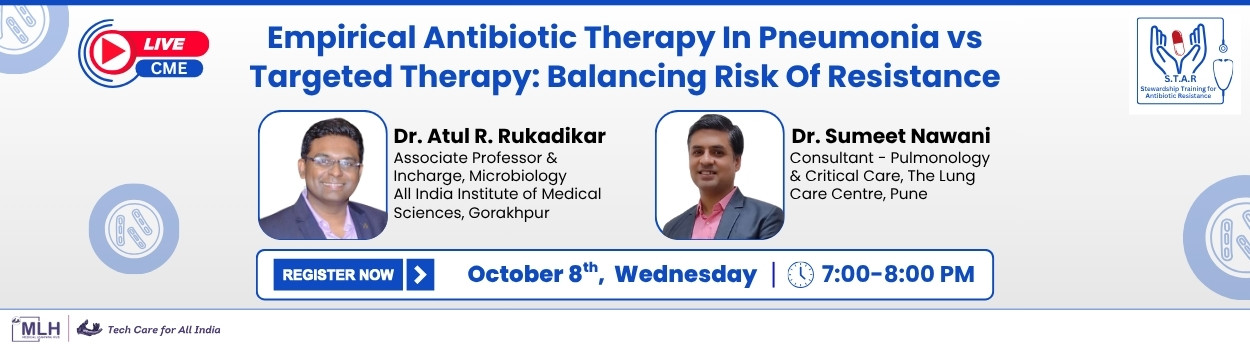
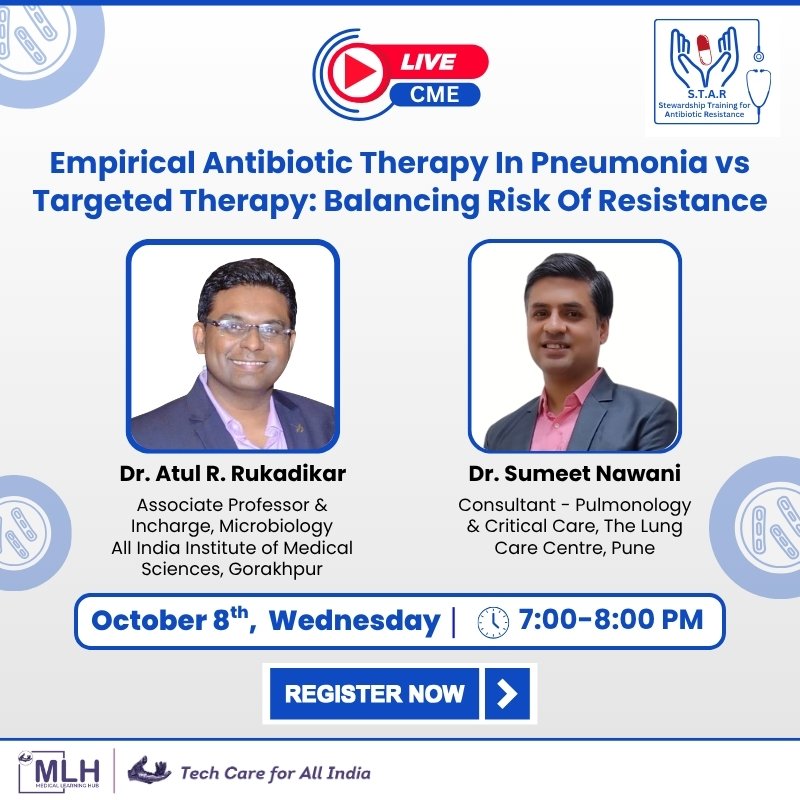
Welcome Note: Dr. Shubhi from Medical Learning Hub welcomed the esteemed speakers, Dr. Atul R. Rukadikar , Dr. Sumeet Nawani along with all the participants.
Session 1: Mechanisms and microbiology of Drug Resistant Respiratory Infections ,Dr. Atul R. Rukadikar, Associate Professor & Incharge of Microbiology at AIIMS Gorakhpur.
Key Points of the session were.
AMR is a Global Threat: Caused by misuse/overuse of antimicrobials in humans, animals, and plants; leads to millions of deaths annually.
Resistance Mechanisms: Bacteria resist drugs by inactivating them, altering targets, or reducing drug entry/increasing efflux.
Antibiotic Classes: Classified by target cell wall (Penicillins), protein synthesis (Macrolides), nucleic acid (Fluoroquinolones), metabolism (Sulfonamides).
Drug-Class Specific Resistance: Example Penicillin (β-lactamase), Vancomycin (target alteration), Aminoglycosides (drug-inactivating enzymes).
Pathways of Resistance: Intrinsic (natural) or acquired (mutations/gene transfer due to antibiotic pressure).
Global Control Strategy: Includes antimicrobial stewardship, infection prevention, surveillance (e.g., WHO GLASS), and AWaRe framework.
Emerging Solutions: Monoclonal antibodies, bacteriophages, CRISPR, AI, and genomics for rapid diagnostics and drug discovery.
Integrated Approach Needed: Combine new therapies with hygiene, vaccination, stewardship, and fast diagnostics to preserve current drugs
Session 2 : Treatment guidelines for Respiratory Infections By Dr. Sumeet Nawani , Consultant- Pulmonology and Critical Care, The Lung Care Center, Pune.
Key Points of the session were.
Antibiotics don’t treat viral infections: Ineffective for colds or viral respiratory infections; focus on rest and symptom relief.
Use only for confirmed bacterial infections: Reserve for diagnosed cases like otitis media, bacterial sinusitis, or strep throat.
Penicillins are first-line: High-dose Amoxicillin is preferred; use alternatives for severe cases or allergies.
AMR is a global threat: Misuse leads to resistant bacteria like MRSA and CRAB, causing many deaths worldwide.
Complete full course: Finish prescribed duration to fully clear infection and prevent resistance.
CAP definition and diagnosis: Community-Acquired Pneumonia severity guides testing (sputum, blood cultures) and treatment decisions.
Treatment depends on setting and risk: Based on outpatient/inpatient status, severity, and risk of resistant pathogens; de-escalate after culture results.
Q&A Session: Participants actively engaged in a Q&A session moderated by Dr.Shubhi, where Dr. Atul R. Rukadikar , Dr. Sumeet Nawani, addressed queries and shared expert insights.
Closing Remarks: Dr. Shubhi concluded the session with a vote of thanks, appreciating the speaker and participants for their valuable contributions.
We wish you a great learning experience!
Theme Topic: Empirical antibiotic therapy in pneumonia vs targeted therapy: balancing risk of resistance.
- Session 1: Mechanisms and microbiology of Drug Resistant Respiratory Infections , By Dr. Atul R. Rukadikar, Associate Professor & Incharge of Microbiology at AIIMS Gorakhpur. (20 Min)
- Session 2 : Treatment guidelines for Respiratory Infections. By Dr. Sumeet Nawani , Consultant- Pulmonology and Critical Care, The Lung Care Center, Pune. (20 Min)
- Q&A Session: (10 min)
- Vote of Thanks : (5 mins)
- Consultant
- Family medicine
- Pediatricians
- ENTs
- GPs
- ID specialist